 Sleeping
 Concerts
 Motorcycle
 Swimming
 Work
 Kids

 On stage
 In the studio
 Rehearsals
 Writing music
 Mixing at home
 Daily commute
 Long journeys
 Listening at home
⏱️ Estimated reading time: 12 min
On this page: Overview
Key Takeaways
A weighted eye mask rests a soft, even pressure over your eyes using a pad of glass beads, plastic pellets or flax, usually a few hundred grams and up to about 450 g. Some sleepers like that tucked-in feeling. It blocks light like any other mask, and on a back sleeper the weight can help the edges sit closer to the face.
Usually a flat silk mask. A weighted mask’s pressure goes lopsided once one side of your face is on the pillow, and heavier strapless designs tend to slide off when you turn. A thin silk mask with an adjustable strap stays in place much more easily.
Partly. Most weighted masks have a removable cover you can wash, but the bead insert should only be spot-cleaned, and some whole masks are hand-wash only, so go by the care label. Our flat silk Deep Sleep Mask goes in the washing machine whole at 30 °C, inside a laundry bag.
A weighted eye mask is built around one idea: gentle pressure over the eyes, a bit like the feeling of being tucked in under a heavy duvet. A flat silk sleep mask goes the other way and sits so lightly you stop noticing it. So the weighted eye mask vs silk eye mask question is really pressure against lightness, and heat, bulk, washing and side sleeping all follow from that.
At Bollsen, we are a family-owned hearing protection company trusted by 1,000,000+ people, and we make a mulberry silk mask. We don’t make a weighted one. That gives us a side, so we’ve tried to be straight about where the weighted mask does better.
Owner reviews of weighted masks keep coming back to two complaints. Side sleepers wake to find it has slid off, and people who run hot find the padded backing too warm. Neither matters much if you sleep still, on your back, in a cool room.
What does a weighted eye mask do?
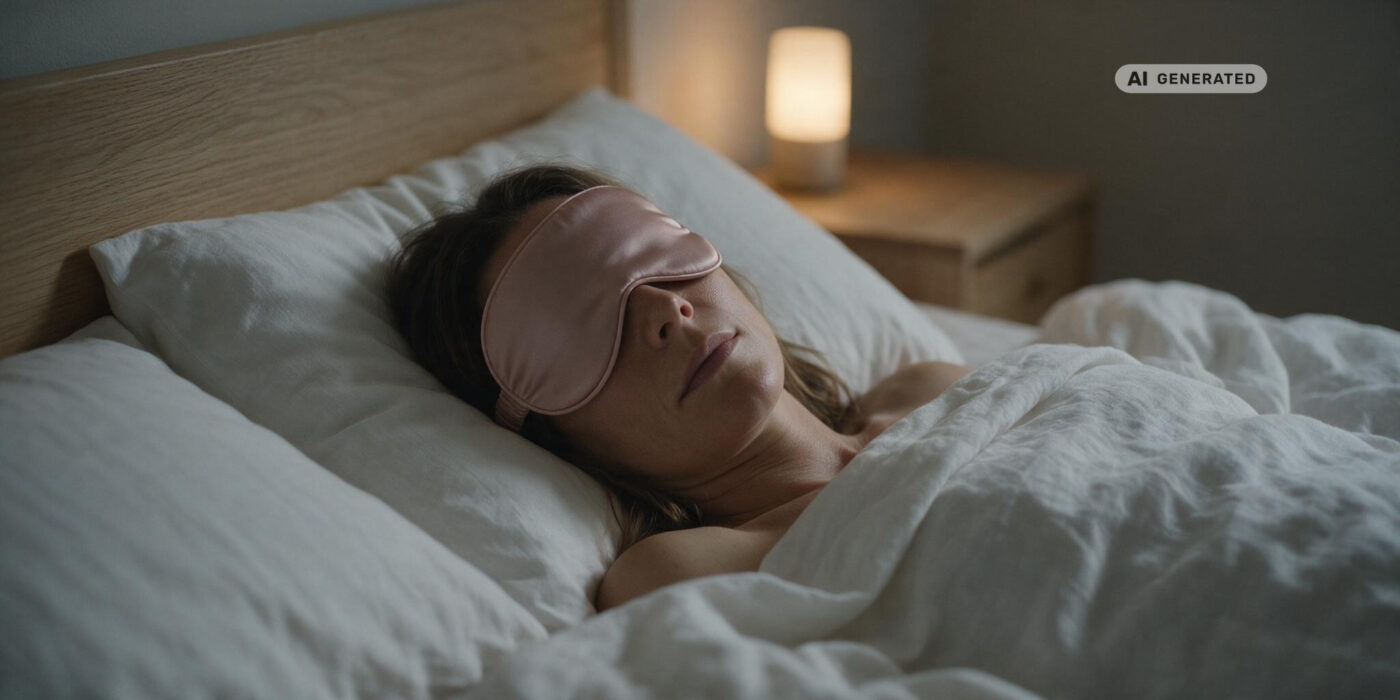
A weighted eye mask rests a soft, even pressure over the eyes and upper cheeks using a pad of glass microbeads, plastic pellets or flax seed, and it blocks light the way any mask does, by covering the eyes. The weight is the whole difference. Some sleepers love it, some can’t stand it.
Most weigh a few hundred grams. The optometrist-reviewed guide to sleep masks from All About Vision puts weighted masks at about a pound, roughly 450 g, with the weight spread evenly across the mask. The fill sits in stitched channels or an inner pad so it can’t all roll to one side. A plain flat silk mask weighs a few dozen grams.
There is one practical upside beyond the feel. On a back sleeper the weight presses the mask’s edges down, which can help close the gaps around the nose where light creeps in. Published research on weighted eye masks themselves is thin, so the fair test is simple. Do you like the pressure, and can you fall asleep with it on?
 Music SoundPRO★ 4.8 · 514 reviews
 Watersafe+★ 4.8 · 684 reviews
 Life+★ 4.7 · 3,700 reviewsLife+★ 4.7 · 3,700 reviewsMusic SoundPRO★ 4.8 · 514 reviewsWatersafe+★ 4.8 · 684 reviewsLife+★ 4.7 · 3,700 reviews
What makes a silk eye mask different?
A silk eye mask differs from a weighted one in what touches your skin, not in how hard it presses, because silk is a fibre choice and weight is a construction choice. You can even buy a weighted mask with a silk cover.
Silk is a smooth continuous filament, typically 10–13 µm across. A February 2026 review of textile fibres in RSC Advances puts its friction coefficient at around 0.15 and notes that it allows efficient moisture vapour transmission. In a thin, flat mask, that means a surface that glides over the skin around the eyes and lets damp air out.
Light masks also come in cotton and polyester. Cotton is breathable and temperature-regulating too, and usually cheaper, so silk is a choice for feel and low friction rather than the only light option. Below, “silk mask” means a flat, unweighted one, since that is the comparison most people are making.
How do weighted and silk eye masks compare?
Side by side, a weighted eye mask wins on pressure and can hold its edges down better on a back sleeper, while a flat silk eye mask wins on warmth, bulk, washing, packing and side sleeping.
| Criterion | Weighted eye mask | Flat silk eye mask | What it means for you |
|---|---|---|---|
| Pressure | Gentle, even pressure from a bead pad, commonly a few hundred grams and up to about 450 g | Almost none; a few dozen grams held on by a strap | Pick weighted only if you know you like the pressure |
| Warmth | Fill, padding and often a plush or fleece backing hold heat against the face | One thin layer that lets heat and moisture vapour escape | Hot sleepers and warm bedrooms favour silk |
| Bulk | Thick bead pad that sits proud of the face | Thin and soft, follows the shape of the face | Less to feel against the pillow with silk |
| Washability | Cover often removable and washable; bead insert spot-clean only | Many are hand-wash only; ours takes a 30 °C machine wash | Check the care label either way |
| Packability | Doesn’t fold well and needs its own space in a bag | Folds flat into a pocket or wash bag | Silk is the easier travel mask |
| Side sleeping | Pressure goes lopsided on the pillow; heavier strapless designs slide | Stays put with an adjustable strap | Side and restless sleepers favour silk |
Weighted masks sell for roughly £15–£40 in UK shops and our Deep Sleep Mask costs £39.95, at the top of that range, so it is worth weighing the rows above against the price.
Do weighted eye masks get hot?
Yes, a weighted eye mask usually runs warmer than a flat silk one, because the bead fill, the padding around it and the plush or fleece backing many models use all hold heat against your face, while a single thin silk layer lets heat and moisture vapour escape.
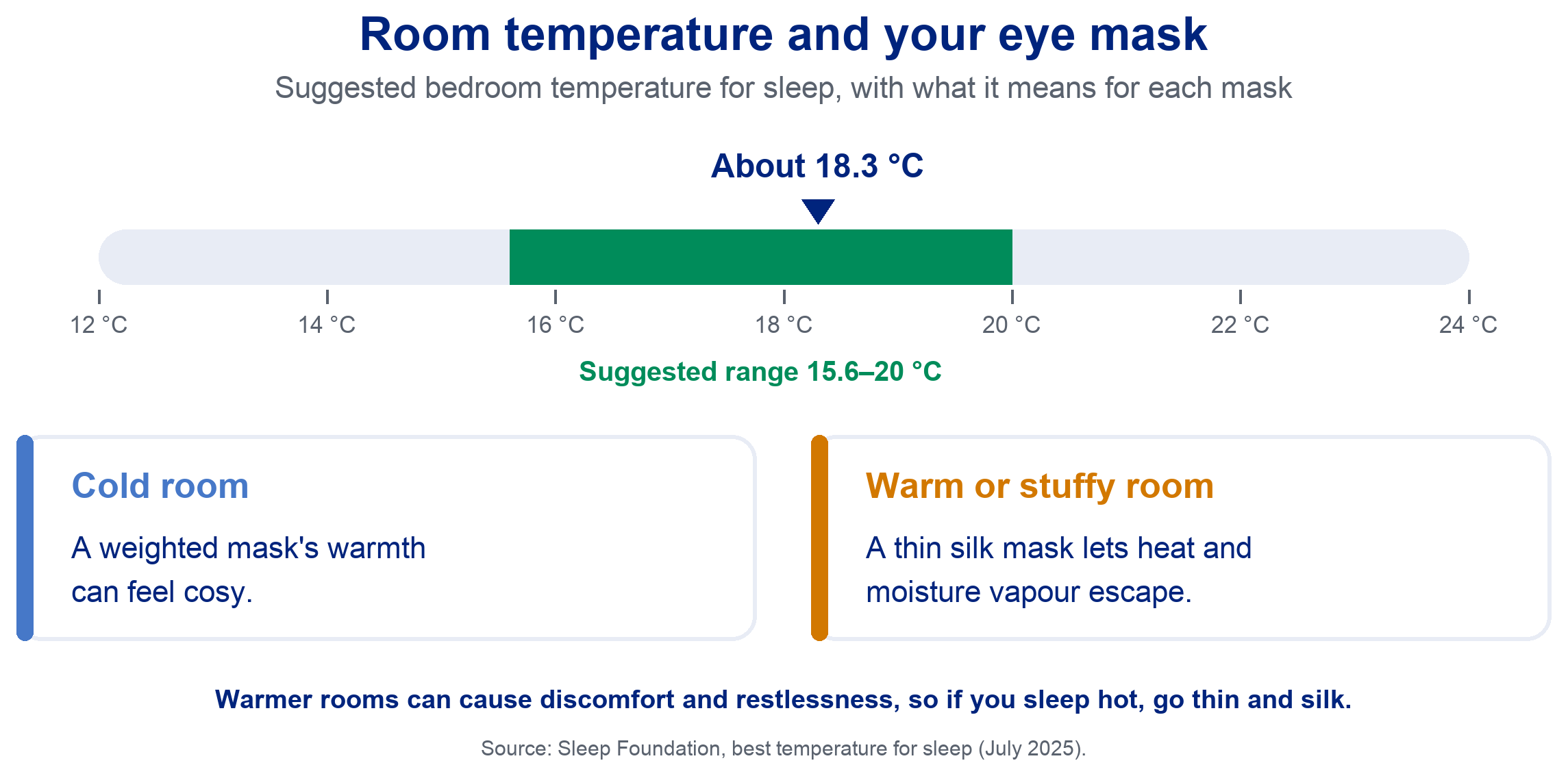
The bedroom matters as much as the mask. The Sleep Foundation suggests about 18.3 °C, within a range of 15.6–20 °C, and notes that warmer rooms can cause discomfort and restlessness. In a cold room in January, a weighted mask’s warmth can feel cosy. In a stuffy room in July, it is often the first thing pulled off at 3am.
Owner reviews agree. The plush side gets called noticeably warm: nice in winter, too much for anyone who sleeps hot.
If heat is your main worry, go thin and silk. You can also chill ours in the fridge for 20 minutes before bed so it works as a cold compress for the eye area, the simple version of what cooling eye masks set out to do.
Is a weighted or a silk eye mask better for side sleepers?
A flat silk eye mask is usually better for side sleepers, because a weighted mask’s pressure goes lopsided when one side of your face rests on the pillow, and heavier strapless designs tend to slide off as you turn, while a thin mask with an adjustable strap stays where you put it.
Many weighted masks are designed with back sleepers in mind. Side sleepers who review them describe the same morning, mask on the pillow instead of on their face. Front sleepers press any mask into the pillow, and a thin one is kinder there too.
Silk can slip as well. One owner review we read complained that a silk mask was slippery enough to end up off the face by morning. What keeps any light mask on is a strap you can tighten, which is why ours uses an adjustable Velcro strap that won’t degrade or pull hair. Shapes, pillows and fit are covered in our guide to a sleep mask for side sleepers.
Can you wash a weighted eye mask?
You can usually wash a weighted eye mask‘s removable cover but not its bead insert, which should only be spot-cleaned, and some whole weighted masks are hand-wash only, so the care label decides. A flat silk mask can go into the wash whole if its label allows it.
The insert is the awkward bit. Bead and seed fills dry slowly, and flax-filled masks may lose their shape in a machine. Wipe the insert with a damp cloth, let it dry fully, and wash the cover on its own as the label says.
Either way, masks pick up sweat, skin oil and make-up, and All About Vision advises washing a sleep mask regularly according to its care instructions. The Which? eye-mask buying criteria point out that most silk masks are hand-wash only, so read the label before you buy.
Ours is the exception. The whole mask goes in the washing machine at 30 °C inside a laundry bag with the Velcro closed, and our guide on how to wash a silk sleep mask covers drying and storage step by step.
Is pressure on your eyes a problem?
Light pressure is fine for most people, but a mask that presses firmly on the eyes can leave your vision blurred on waking. All About Vision’s advice is to loosen the mask if that happens and to see an eye doctor if the blurring lasts longer than 24 hours.
Weighted masks are the likelier culprit, since pressure is their point, but an over-tightened strap on a flat mask can do it too. A mask should rest on the face, not push into it.
Anyone with an eye condition, or who has had eye surgery recently, should ask an optometrist before wearing a mask that presses on the eyes. You can find one through the NHS opticians service.
Some people never get used to the weight. One buyer wrote that they could not make it past the first night. A common tip in reviews is to try a regular sleep mask first and add weight only if you miss it.
When is a weighted eye mask the better choice?
A weighted eye mask is the better choice if you like the feel of gentle pressure, sleep mostly on your back and stay fairly still, sleep in a cool room or run cool yourself, don’t mind spot-cleaning an insert, and rarely need to pack it.
Choose a weighted mask if the pressure is what you are after and a light mask feels like nothing at all. On a still back sleeper it can hold its edges down for a closer fit, and in a cold bedroom the warmth may be welcome. Look for a removable cover.
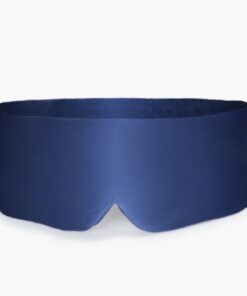
Choose a flat silk mask if you sleep hot, sleep on your side or move a lot, travel often, or want to put the whole mask in the washing machine. For that, our Deep Sleep Mask is made from natural mulberry silk with no cotton, gives total darkness, folds flat for travel and washes at 30 °C. It costs £39.95 in Navy Blue, Rose Quartz or Triple Black, with free UK delivery over £35 and a 40-day money-back guarantee.
If noise wakes you as well as light, the Deep Sleep Duo puts the silk mask in one box with our Life+ earplugs, which are passive, reusable and rated at SNR 24 dB. For every other shape and fabric, our guide on how to choose a sleep mask goes through each type.
Weight is a preference, not an upgrade. Want pressure? A weighted mask gives you something silk can’t. Want a mask that stays cool, stays on and goes in the wash? Silk is easier to live with, and our answer to is a silk sleep mask worth it looks at the fibre itself.