 Sleeping
 Concerts
 Motorcycle
 Swimming
 Work
 Kids

 On stage
 In the studio
 Rehearsals
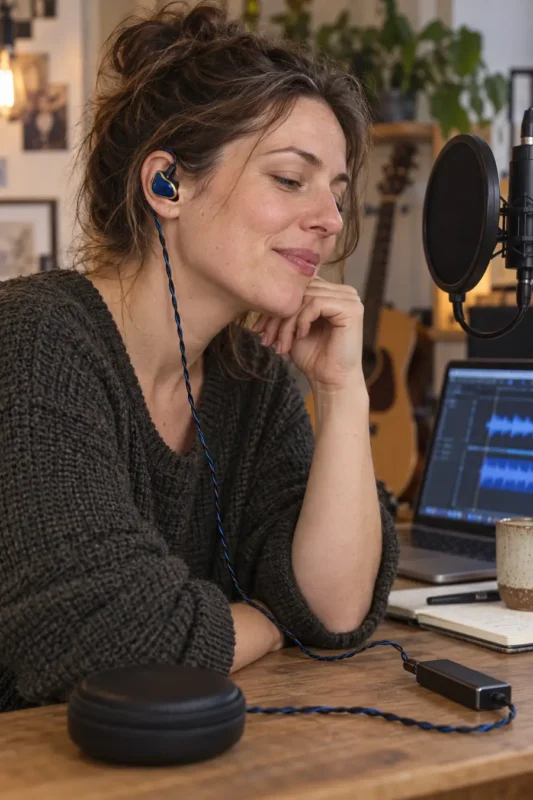 Writing music
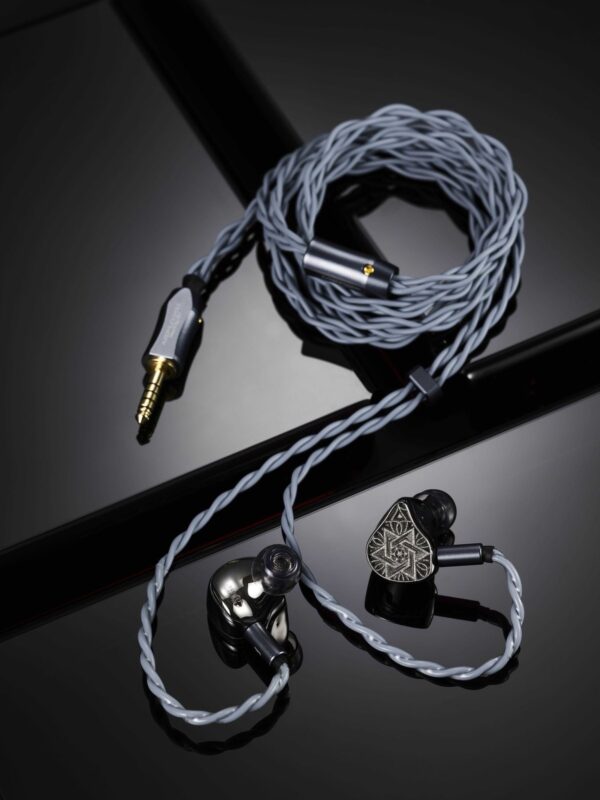 Mixing at home
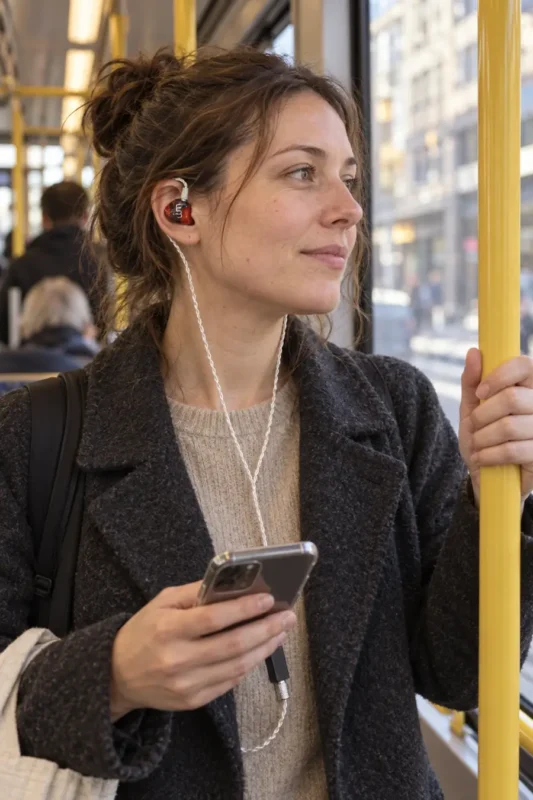 Daily commute
 Long journeys
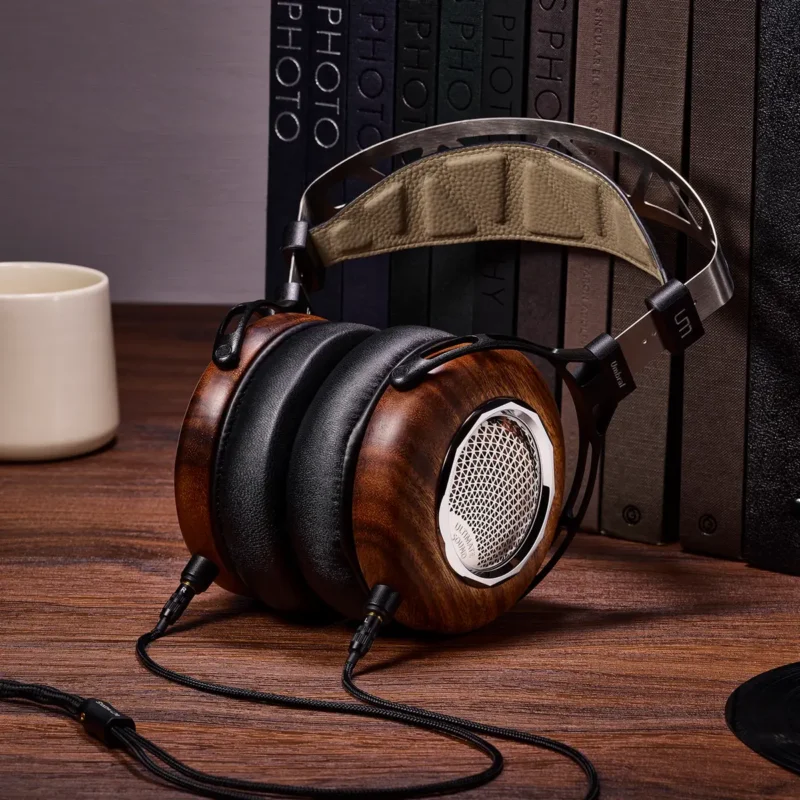 Listening at home
⏱️ Estimated reading time: 11 min
On this page: Overview
Key Takeaways
Yes, as long as your mixer or controller can split cue and master or blend them with a cue/master MIX knob. With both in-ears in, you hear the next track and the master together, and a good seal lets you listen at a lower volume.
Keep both in and let the mixer do the work: split cue puts the cued track in your left ear and the master in your right on mixers such as Pioneer DJ’s DJM-A9, or the MIX knob blends the two. Pulling one in-ear out to hear the room is the headphone habit that costs you level.
Headphones are quicker to slip on and off and work with any mixer. IEMs keep the same sealed mix all night, but need practice, a split-cue or MIX control and a cable that reaches the mixer.
If you cue with one in-ear out, the booth still reaches the open ear, so many DJs keep a plug in it; our guide to DJ earplugs covers that side of the booth.
Most DJs learn to cue on headphones. One cup on, one cup off, the room in the other ear. Look up in ear monitors for djs and you mostly find pick lists and the promise that in-ears suit the booth. They can, but only if you change how you cue, plug them into the right socket and pick tips you can still bear at 4 a.m.
We are Bollsen, an earplug maker and the official UK & EU partner of Unique Melody. We stick to monitoring here, from cueing and the mixer to three models that last a long set. New to the gear? Start with what are in-ear monitors.
Can you DJ in in-ear monitors instead of headphones?
Yes. In-ear monitors (IEMs) work for DJing when your mixer or controller can split or blend cue and master, because then you hear both tracks with the earpieces in instead of lifting a cup off. You give up speed and get consistency.
Headphones win on convenience. You slide one cup off to take a request or check the room, and any mixer drives them. In-ears seal, so your mix sounds the same everywhere in the booth, but you can’t just slip them off.
Expect the first gigs to feel dry, without the booth pushing on your chest. The wider comparison sits in IEMs vs headphones; for a DJ, the deciding question is how you cue.
How do DJs cue with in-ears?
With both in-ears in, DJs cue through the mixer: split cue (mono split) sends the cued channel to one ear and the master to the other, while the cue/master MIX knob blends the two in both ears. Either way you beatmatch by ear without breaking the seal.
On a club mixer such as Pioneer DJ’s DJM-A9, the DJM-A9 operating instructions describe MONO SPLIT as sending the cued channel to the left of your headphones and the master to the right. Some basic controllers have no split cue, so check yours first; a MIX knob alone still works.
Hard-panned split cue feels strange after years of one-cup cueing, so some DJs stay on the MIX blend. If you miss the crowd, a low ambience mic in the in-ear feed brings the room back.
What does one-ear-in cueing cost?
It costs you level. 64 Audio, an IEM maker, says you lose about 6 dB of perceived loudness when you take one earpiece out, and most musicians turn up by about 6 dB to compensate. The effect is called binaural summation.
In 64 Audio’s note on wearing only one in-ear, the fix is a proper stereo mix plus ambience. Digital DJ Tips gives the same advice in its tips for switching from headphones to in-ear monitors: use the mixer’s cue control rather than pulling one out.
What this means for your ears is answered in do in-ear monitors protect your hearing? If you keep the one-ear habit, the open ear is the one to plug. Techno DJ Nina W, a BOLLSEN partner, explains why she wears earplugs on the decks in her post with us.
Does a sealed fit help in a loud booth?
It helps the mix: a good seal lets you listen at a lower volume, because less booth sound leaks past the tip to fight your cue. In Mix’s piece on the myths and truths of in-ear monitoring, Sensaphonics’ Michael Santucci calls the earpiece’s ability to seal out external sound “a key factor” in a good in-ear. A loose universal tip leaks bass first, so when the kick sounds thin, check the seal before the LEVEL knob.
IEMs are not hearing protection; for gigs and festivals take Music SoundPRO earplugs. They cost £29.95, have a passive SNR of 24 dB, are made of hypoallergenic silicone, sit flush so they work under headphones, and last up to 100 uses.
Which plug and cable do you need for a DJ mixer?
You need a 3.5 mm plug and either a 3.5 mm mini-jack socket on the mixer or a 3.5 mm to 6.3 mm screw adapter for a 1/4-inch (6.3 mm) jack. Check which sockets your mixer or controller has; many club mixers have both.
The DJM-A9 has two of each, and Pioneer DJ warns against using the jack and mini-jack of one output at once, as the volume may drop. None of our three picks lists a 6.3 mm adapter in the box or states a cable length, so carry an adapter and check the reach to the mixer; Digital DJ Tips notes stock cables are often too short for a booth.
The 2HT and 3DT ship with a 3.5 mm cable. The MEXT lets you choose 3.5 mm, 4.4 mm balanced or 2.5 mm balanced at the same price; order 3.5 mm, since mixer headphone sockets are single-ended stereo jacks. More on that in 3.5 mm vs 4.4 mm balanced plugs.
Mixer headphone amps are built to drive headphones loud: the DJM-A9’s PHONES output is rated at +8 dBu into 32 Ω, with an output impedance of 1 Ω or lower. Audio engineer NwAvGuy’s 1/8 rule for headphone amp impedance asks for an output impedance under an eighth of the earphone’s: about 2 Ω for the 16 Ω MEXT and about 3.2 Ω for the 25.4 Ω 3DT, so that mixer meets both.
Both are sensitive (108 dB and 113 dB at 1 kHz), so turn LEVEL right down before you put them in. The figures are explained in IEM impedance and sensitivity.
Which tips stay comfortable over a long set?
Over a six-hour set, the right ear tip is the one that holds a seal without pressure. Try every size in the box, and don’t assume both ears take the same one, because the seal decides both the bass and the level you need. Tip choice is covered in choosing IEM ear tips.
Per our product pages, the 3DT’s shell is fairly large and its nozzle short, so long-stem tips fit best, and it suits medium to large ears. The MEXT’s shell is on the larger side too, and its bass needs a deep insertion and a good seal. Bring spare tips to every gig: a tip dropped in a dark booth stays dropped.
If universals still work loose or feel tight by midnight, custom fit is the next step, and of these three only the MEXT offers it (£1,289). A hearing specialist near you takes a 3D ear scan or ear impressions, usually charged separately. Your pair is delivered 3–4 weeks after we receive your scans, with a free refit if the fit is not right. It is made to order, so there is no change-of-mind return on custom fit.
Which in-ear monitors suit DJs?
In-ear monitors suit DJs when they seal well, take a 3.5 mm plug for the mixer’s mini-jack or a screw adapter, and stay comfortable over a long set. Three models in our Unique Melody range cover that at three budgets.
| Model | Price | Drivers per side | Plug for a mixer | Fit |
|---|---|---|---|---|
| 2HT | £279 | 2: 1 dynamic + 1 balanced armature | 3.5 mm cable included | Universal only |
| 3DT | £359 | 3, all dynamic | 3.5 mm cable included | Universal only |
| MEXT | £989 universal / £1,289 custom | 6: 1 dynamic + 4 balanced armature + 1 bone conduction | Choose 3.5 mm at order | Universal or custom |
2HT: the entry pair
The 2HT (£279, universal only) pairs one 10 mm dynamic driver with one balanced armature per side and comes with a silver-plated 2-pin cable ending in 3.5 mm. Impedance and sensitivity are not stated, so start with the LEVEL knob down and find your volume by ear.
3DT: the all-dynamic pick
The 3DT (£359, universal only) has two 7 mm composite-diaphragm drivers and one 10 mm carbon-nanotube driver per side. It runs at 25.4 Ω and 113 dB at 1 kHz across 20 Hz–20 kHz and ships with a silver-plated copper cable ending in 3.5 mm. Fit it with long-stem tips; it suits medium to large ears.
MEXT: the long-session step up
The MEXT (£989 universal, £1,289 custom) combines one dynamic driver, four balanced armatures and one bone-conduction driver (200 Hz–7 kHz) at 16 Ω and 108 dB at 1 kHz across 20 Hz–23 kHz. Its product page lists electronic music and long sessions among its uses, and it is the only one of the three with custom fit.
All three are pre-order. Universal fit ships by DHL Express in 5–7 working days, with a 2-year BOLLSEN warranty and 14-day returns on universal fit with the hygiene seal unbroken. Prices include UK VAT.
In-ears work for DJs who stop using them like headphones. Keep both in, cue with split cue or the MIX knob, and start every set with LEVEL down.
Start with the 3DT, or the 2HT on a tighter budget, and move to a custom MEXT when the fit, not the sound, is the problem. You can shop the Unique Melody range with UK prices for all 12 IEMs. For bands and singers, in-ear monitors for musicians covers the rest of the stage.