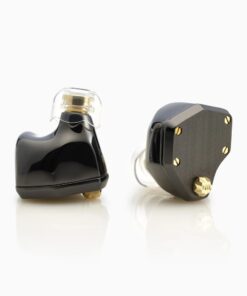
 Sleeping
 Concerts
 Motorcycle
 Swimming
 Work
 Kids


 On stage
 In the studio
 Rehearsals
 Writing music
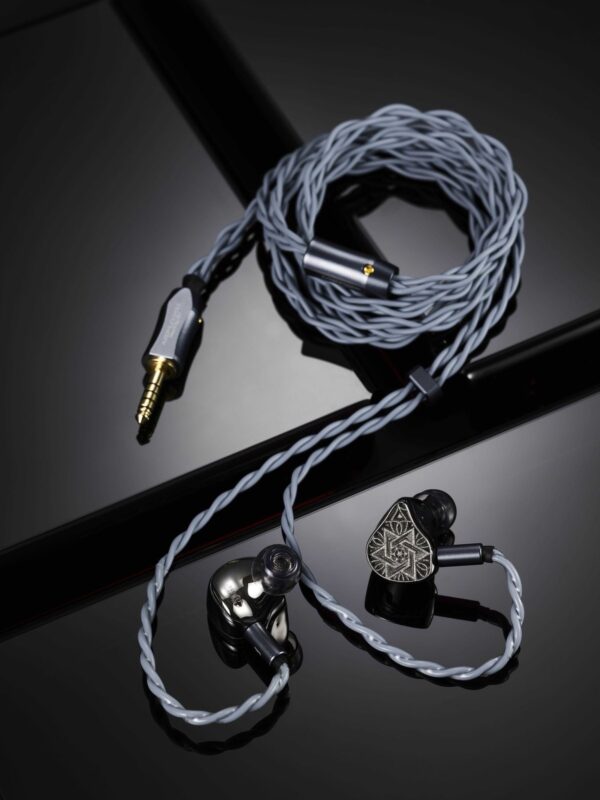 Mixing at home
 Daily commute
 Long journeys
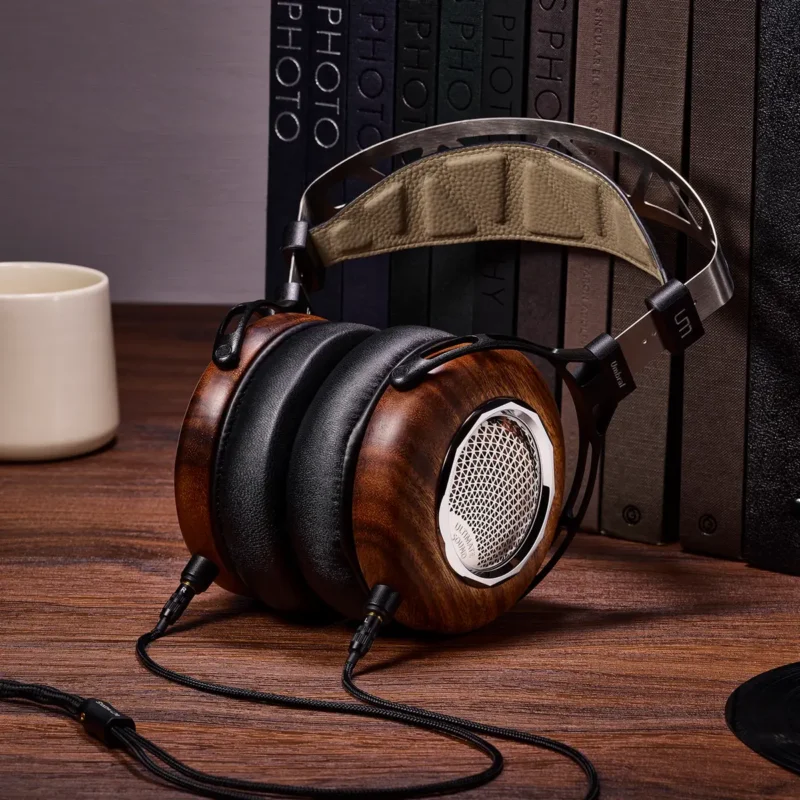 Listening at home
⏱️ Estimated reading time: 12 min
On this page: Overview
Key Takeaways
Neither is better across the board. IEMs win on isolation, portability and stage use because they seal inside the ear canal and fit in a small case. Headphones, open-backs especially, usually sound more spacious and avoid fit fuss, so they suit long sessions in a quiet room.
Yes, for a lot of the work. Sound On Sound says IEMs work brilliantly for detailed balance work and automation because they give the same response every time, but it still recommends a final check on speakers, mainly for bass. Most engineers keep speakers and headphones as the reference and use IEMs to check.
Usually, yes, compared with open-back headphones. Both feed each ear only its own channel, so a stereo mix made for speakers tends to sit inside your head either way. Open-backs tend to sound wider and more airy, while good IEMs place sounds precisely but closer in.
IEMs, for most people. They block a lot of engine and street noise without power, and Sound On Sound notes their cases are typically no larger than a spectacles case. Closed-back headphones isolate too but take up bag space, and open-backs let noise in, so leave those at home.
The usual answer to IEMs vs headphones is one line: in-ears isolate and travel, headphones have the bigger soundstage. It is roughly true, but it skips why. It also lumps closed-back and open-back headphones together, and they behave very differently.
Listener forums keep having the same argument. One camp says open-backs beat most in-ears for soundstage; the other says IEMs are simply a different presentation. Both have a point. Which one matters depends on whether you are listening, mixing or performing. If you are new to the category, start with what are in-ear monitors. If you are comparing in-ear designs with everyday earbuds instead, see IEMs vs earbuds vs earphones.
At Bollsen, we are a family-owned hearing company and the official UK & EU partner of Unique Melody. We sell 12 Unique Melody IEMs and a single open-back headphone, so we hear this question from both sides.
How are IEMs and over-ear headphones built differently?
In-ear monitors (IEMs) sit inside the ear canal and seal it with an ear tip or a custom-moulded shell, while headphones rest on or over your ears with cups and pads. That seal, or the lack of it, decides most of what follows: isolation, how the stereo image feels, and how comfortable each is after a few hours.
Headphones split again. Closed-back cups are sealed shells that hold sound in and keep some noise out. Open-back cups are vented, so sound passes freely both ways. The design has a long history: Sennheiser describes its HD 414 of 1968 as “the world’s first open-back headphones” in its Sennheiser company history.
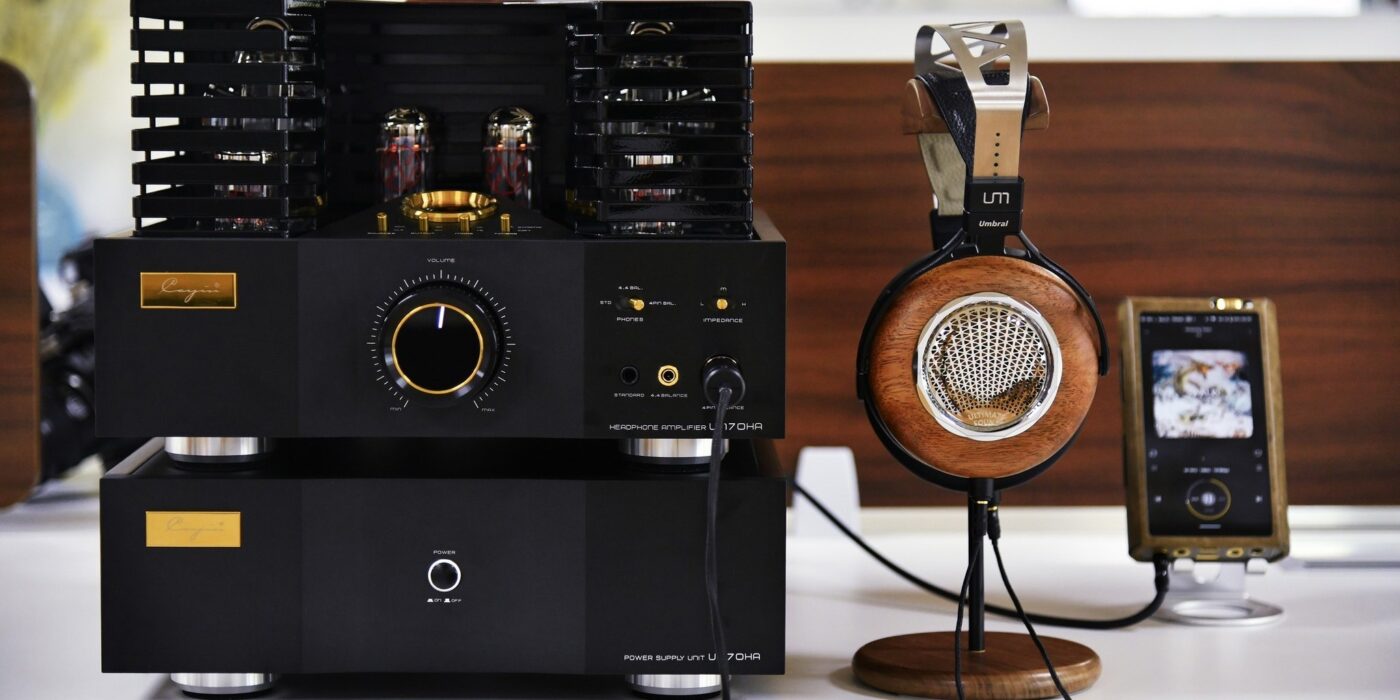
Our own example of the open type is Unique Melody’s Umbral, the range’s one open-back headphone. The Umbral open-back headphones pair a 96 mm planar magnetic driver with a MEMS tweeter, weigh 520 g, cost £5,399 and are limited to 99 units worldwide. As the product page puts it, sound “passes in and out”. That is what gives them their wide, natural stage.
How do IEMs, closed-backs and open-backs compare?
On the six points that decide most purchases, IEMs lead on isolation, portability and stage use, open-back headphones lead on a spacious stereo image, and closed-backs sit between the two. The figures below come from the sources linked in each section; the soundstage row is the general view, not a measurement.
| What you compare | IEMs | Closed-back headphones | Open-back headphones |
|---|---|---|---|
| Isolation | 15–25 dB passive with a quality universal fit, 30 dB or more custom-moulded (Sound On Sound) | Some passive isolation from the sealed cups; some models add noise cancelling | Almost none: sound passes in and out |
| Soundstage | Precise, but the image sits close and inside the head | Also inside the head; often a little wider | Usually the most spacious and airy |
| Portability | Pocket case, roughly spectacles-case size | Bulky; folding models travel | Best left at home in a quiet room |
| Comfort over hours | Depends on tip size and seal; custom fit helps | Clamp force and warm ears | Cooler and airier, but heavy models press down |
| Source demands | A phone or dongle is usually enough | Varies by model | Large planar models such as the Umbral can need a desktop amp of 10 W or more |
| Stage use | The standard for monitoring: stays put, discreet, plugs into a bodypack | Bulky and easy to knock off when moving | Leaks into nearby microphones |
Which isolates better, IEMs or headphones?
IEMs isolate better than most headphones because the tip or shell seals the ear canal itself. Sound On Sound puts quality universal IEMs at 15–25 dB of passive isolation and custom-moulded versions at 30 dB or more, with no battery or noise-cancelling circuit involved.
Manufacturers quote their own ratings too. Shure says the Sound Isolating design on its Shure SE215 earphones “blocks up to 37 dB of noise”, a best-case figure that depends on a good fit. In both cases the seal does the work, so a tip that is too small loses much of it.
A good seal lets you listen at a lower volume, because less of the train or the office leaks in. Closed-back headphones block some noise, and models with noise cancelling block more. Open-backs block almost nothing, which is why they belong in a quiet room.
Do IEMs have a smaller soundstage than headphones?
IEMs usually have a smaller, closer soundstage than open-back headphones, but neither sounds like a pair of speakers. Most stereo music is mixed for loudspeakers, and once each ear hears only its own channel, the image tends to collapse inside your head.
Researchers at Carnegie Mellon describe this in an Acoustical Society of America paper on headphone spatialisation. A speaker mix on headphones gets “placed in between the listener’s ears, inside of their head”, sometimes as “three isolated lobes”. Some headphone amps add crossfeed, which mimics how each ear hears both speakers in a room.
Our reading is that the same applies to IEMs, since they also feed each ear separately. Open-backs tend to feel wider because the vented cups and the larger space around the ear make the sound seem less boxed in. Good IEMs trade that width for precise placement, closer to your head.
Which is more comfortable for long sessions?
Comfort over hours comes down to fit for IEMs and to clamp, heat and weight for headphones. Forum users report both problems: in-ears that start to feel tiring after a few hours, and headphones that get hot or press on glasses arms during a long stretch.
With IEMs, the right tip size matters more than anything, and a custom fit removes most of the guesswork. We offer custom fit on six models for £300 over the universal price; the MEST Jet Black, for example, is £1,799 universal or £2,099 custom.
Full-size headphones spread their weight over the head instead. The Umbral weighs 520 g, so pad choice matters. It ships with sheepskin leather pads and ice-silk pads, which the product page says “feel cooler and more open for long sessions”.
Do headphones need more power than IEMs?
Large planar headphones often need far more power than IEMs, because big, low-sensitivity drivers take more current to reach a normal listening level. Our own range shows the gap.
The Umbral is rated at 65 Ω and 84 dB/mW. Its page recommends “a high-power desktop amplifier … ideally 10 W or more single-ended” and says it “will not reach its potential from a phone or portable player”. Those figures are for a headphone meant to live on a desk.
Now the in-ear side. The MEST Jet Black is rated at 12.6 Ω and 106 dB at 1 kHz, and its page says “no amplifier needed for most listeners”. The 3DT (25.4 Ω, 113 dB, £359, universal fit only) ships with a 3.5 mm plug for almost any dongle or laptop.
The sensitivity figures are quoted in different ways, so read them as a guide rather than a straight comparison. For phones, dongles and when a separate amp is worth it, see do you need a DAC for IEMs.
Can you mix on in-ear monitors or headphones?
You can mix on in-ear monitors and on headphones, but most engineers still use studio speakers as the reference and use IEMs to check details. Sound On Sound’s guide, Sound On Sound on mixing with in-ear monitors, says IEMs “work brilliantly for detailed balance work, automation, and general mixing decisions, but a final check on speakers is always helpful.”
Its case for in-ears is consistency. Unlike headphones, which shift on your head, or rooms, where your seat changes what you hear, IEMs “deliver the same response every time”. The limit is bass: “The one thing IEMs can’t replicate is that tactile bass response you get from large nearfield monitors.”
Stereo width is the other catch. On headphones the left and right channels never mix the way they do in a room, so pan and reverb choices can sound different on speakers, and a closing pass on speakers is worth keeping.
Sound engineers working front of house have a separate question, which is about their own ears at the desk. Our guide to earplugs for sound engineers covers it.
Why do performers wear IEMs rather than headphones on stage?
Performers wear IEMs on stage because a sealed fit stays put while they move, the cable runs down the back to a bodypack, and the earpieces are barely visible. Headphones are bulky, can slip off, and open-backs leak their sound into nearby microphones.
The seal helps too. With room noise partly blocked, the monitor mix stays clear without being turned up as far.
IEMs are not hearing protection; for gigs and festivals take Music SoundPRO earplugs. They cost £29.95, have a passive SNR of 24 dB, are made of hypoallergenic silicone and last up to 100 uses.
For what in-ears do and don’t do for your ears, read do in-ear monitors protect your hearing?
So should you choose IEMs, headphones or both?
Choose IEMs if you travel, commute, perform or want one pair that works from a phone. Choose closed-back headphones if you want some isolation at a desk and would rather not put anything in your ears.
Choose open-back headphones if you listen in a quiet room, want the widest stage and already own a capable amplifier. Choose both if you mix or perform as well as listen: in-ears for the stage, travel and checks, open-backs or speakers at home.
To compare every model’s drivers, plugs and prices, see our page for Unique Melody in-ear monitors (UK). Universal-fit orders ship free by DHL Express in 5–7 working days, with a 2-year BOLLSEN warranty and 14-day returns while the hygiene seal is unbroken.