 Sleeping
 Concerts
 Motorcycle
 Swimming
 Work
Work Kids
Kids

⏱️ Estimated reading time: 8 min
Key Takeaways
They change it. Passive earplugs make music quieter, and most also cut the highs more than the lows, so it sounds a little darker than it does without them. It is not identical to unplugged listening, but you still hear the music, just quieter, and many regulars find that a fair trade.
No. In its EN 352-2 laboratory test, attenuation rises with frequency, from about 22 dB at 63 Hz to about 35 dB at 8 kHz, with an overall SNR of 24 dB. Bass is reduced less than treble, but nothing is passed through untouched. It is a passive plug, not an electronic filter.
Long nights close to big sound systems add up. Nina W, a techno DJ, says that is exactly why she wears hearing protection. Wearing earplugs lowers the level reaching your ears, which reduces your exposure and the risk of damage over the years. It does not remove that risk completely.
Plan on a few nights. The first time, everything sounds quieter and slightly duller, which is normal. A deeper, well-sealed fit makes a big difference. Many people stop noticing the change after a few outings. If ringing lasts or keeps coming back, speak to your GP or an audiologist.
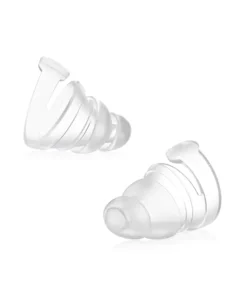
Yes. The transparent two-lamella silicone design is made to be compatible with headphones and in-ear monitors. Check the fit with your own set before a gig, because every ear canal and every monitor is a little different. The plugs are reusable up to 100 times and come with an aluminium case and keyring.
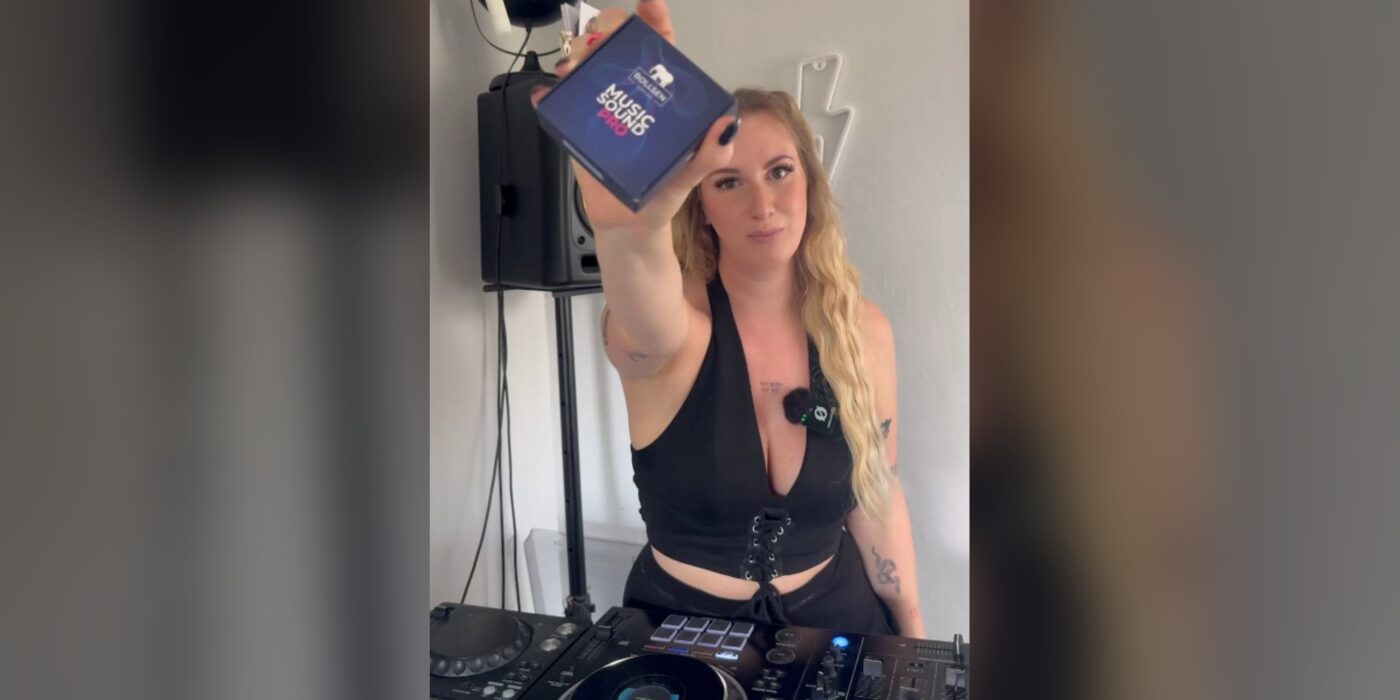
BOLLSEN works with Nina W, a techno DJ, as a partner; their Instagram post is a paid partnership. Nina plays hard techno and rave sets, and in her post (below, in German) she explains why she wears hearing protection on the decks. The question behind it is one every DJ, raver and club regular asks sooner or later: do music earplugs ruin the sound? Here is an honest answer.
What Nina W says about wearing hearing protection
Nina’s post is headlined “Hearing protection that doesn’t kill the sound” (translated from German). That is her opinion as a working DJ, and we are quoting it as such. She goes on: “Honestly: as a DJ, everything stands or falls with the sound. But that’s exactly why I wear hearing protection” (translated from German).
She also describes what a night job in loud rooms does: “Long nights, big sound systems, sets until the ceiling shakes… that takes its toll on your ears, whether you notice it or not” (translated from German). Her closing line is simple: “Look after your ears” (translated from German).
Do music earplugs ruin the sound? The honest answer
Not ruin, but they do change it. Any passive earplug lowers the volume reaching your eardrum, and no plug does that equally at every pitch. Basic foam plugs tend to muffle the highs most, which is why music through them can sound like it is playing in the next room. We compare the two types side by side in music earplugs vs foam earplugs.
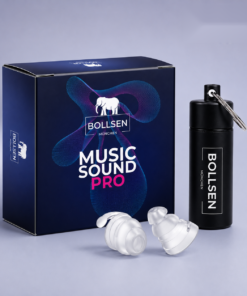
BOLLSEN Music SoundPRO is a passive earplug made from hypoallergenic silicone. It is not electronic and it is not noise cancelling. In its EN 352-2 laboratory test it reached an SNR of 24 dB (H 24, M 21, L 19). The mean attenuation by frequency was:
- 63 Hz: about 22 dB
- 125 Hz: about 23 dB
- 250 Hz: about 22 dB
- 500 Hz: about 22 dB
- 1 kHz: about 23 dB
- 2 kHz: about 28 dB
- 4 kHz: about 29 dB
- 8 kHz: about 35 dB
Read that as it is: the lows and mids come down by roughly 22 dB, while the top end comes down by more. So the music is quieter and a little darker, not identical to what you hear without plugs. You still hear the music, just quieter, and the room does not disappear.
Why many DJs and ravers still choose earplugs
The trade-off is simple. A slightly darker sound is something your ears adjust to within a night or two. The alternative is a long night at full level, and the World Health Organization notes that over one billion young people globally are at risk of hearing loss from sound exposure in recreational settings. Earplugs lower the level, which reduces your exposure and your risk. They do not remove it, and breaks away from the speakers still help.
In a controlled study at a music festival, 8% of earplug users had a temporary hearing threshold shift, against 42% of non-users (Ramakers et al., 2016, JAMA Otolaryngology). That study looked at earplugs in general, not at one brand, but it shows why wearing something beats wearing nothing.
If you get ringing after a night out, give your ears a rest. If ringing lasts or keeps coming back, speak to your GP or an audiologist. The NHS tinnitus page explains what to look out for.
Getting used to earplugs: four practical tips
- Fit depth: a well-seated plug at the canal entrance gives a better seal. A loose fit lets bass leak round the sides and makes the sound thinner.
- Give it a few nights: the first outing is the oddest. Your brain adapts quickly to the quieter, slightly darker balance.
- Headphones and in-ear monitors: the plug is designed to be compatible with headphones and IEMs, so you can try it with your own set. Check the fit before a gig, not during.
- Keep them handy: the plugs are reusable up to 100 times and come with an aluminium case and keyring, so they live in your jacket pocket or bag.
For more on this world, read our guides to earplugs for DJs and festival ear protection, and the Dubioza Kolektiv concert earplugs review. You can also see every expert who trusts BOLLSEN.
Which BOLLSEN earplug for the dance floor?
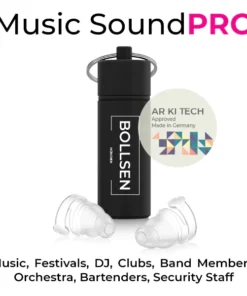
Music SoundPRO is the plug for clubs, raves and festivals. Music SoundPRO with AR KI TECH is the version with AR KI TECH.