 Sleeping
 Concerts
 Motorcycle
 Swimming
 Work
 Kids

 On stage
 In the studio
 Rehearsals
 Writing music
 Mixing at home
 Daily commute
 Long journeys
 Listening at home
⏱️ Estimated reading time: 10 min
On this page: Overview
Key Takeaways
Snug enough to stay put when you turn your head, loose enough that nothing presses on your closed eyelids. If a finger slides under the strap and the mask stays on when you roll over, the tension is right.
Usually the strap sits too low, at the base of the skull, so the mask rides up as your head moves on the pillow. Move the strap above your ears, then set the tension. A stretched elastic strap slips too.
There is no set number of nights, and it varies from person to person. Wearing the mask while you wind down in low light, and keeping the same routine every night, helps it feel like part of going to bed.
A mask that is too tight or too small can leave you with a headache or blurred vision in the morning, so loosen the strap or reposition the mask. If you get headaches regularly, see a GP, and get urgent advice if a headache comes with vision or eye problems.
A sleep mask only helps if it is still on your face at 3am. Plenty of people find theirs on the pillow by morning and blame the mask. Knowing how to wear a sleep mask mostly comes down to the strap, and where it sits matters more than how tight it is.
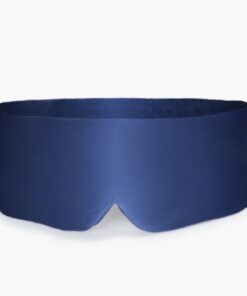
At Bollsen, we are a family-owned hearing protection company trusted by 1,000,000+ people, and we also make a silk sleep mask with an adjustable strap. Below you’ll find the fitting steps we’d follow, how to tell when a mask is too tight, and what the first nights in one tend to feel like.
How do you wear a sleep mask properly?
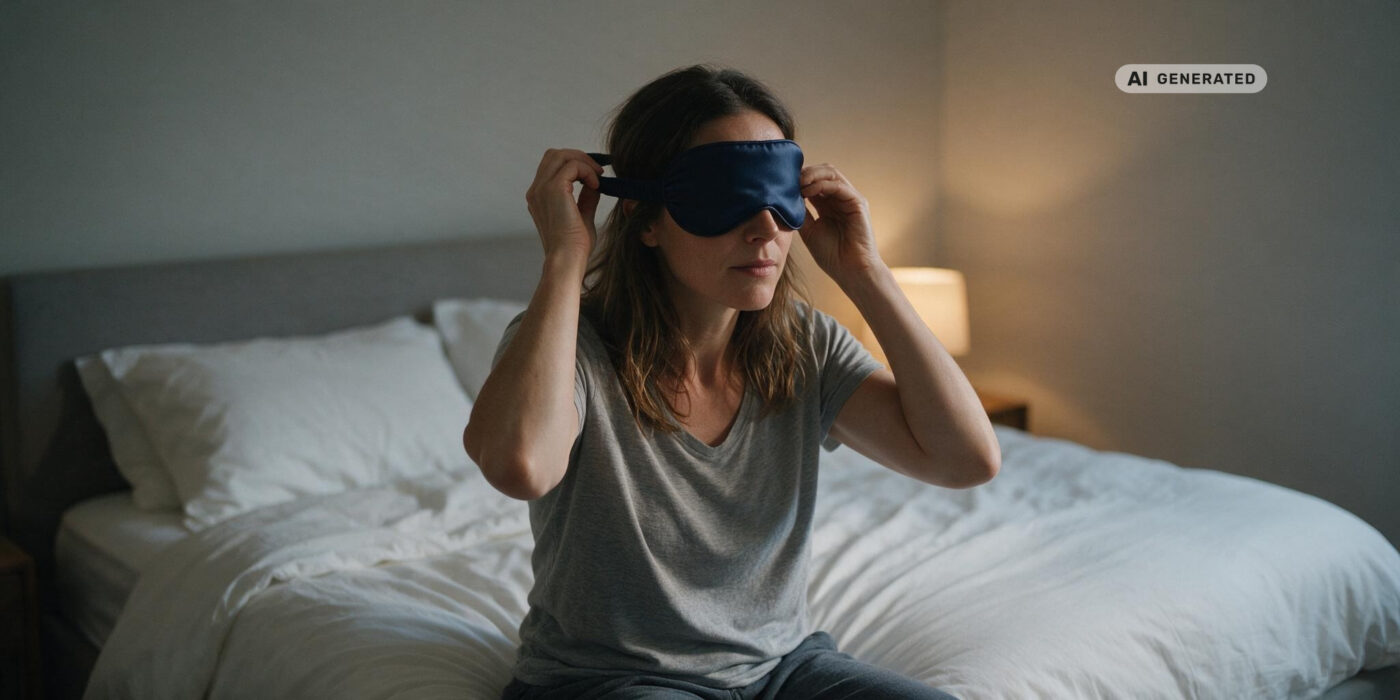
To wear a sleep mask properly, centre it over both eyes with the lower edge resting on the bridge of your nose, sit the strap above your ears across the back of your head, and tighten it just enough to hold when you turn over. Then lie down in your usual position and check it stays put.
- Centre the mask over both eyes. An optometrist-reviewed guide from All About Vision says a mask should cover both eyes completely without putting too much pressure on the eyelids.
- Put the strap above your ears. Run it across the widest part of the back of your head, not low on the neck. A strap at the base of the skull lets the mask ride up onto your forehead as your head moves on the pillow.
- Set the tension. Tighten it until the mask stays in place when you turn your head, with room to slide a finger under the strap. Our Deep Sleep Mask’s adjustable Velcro strap holds the tension you set, and it won’t degrade or pull your hair.
- Check the seal. Open your eyes under the mask and look for light at the nose and cheeks. Our guide on why some sleep masks still let light in explains what helps a mask sit closer.
- Lie down and test it. All About Vision suggests checking the mask in your usual sleeping position. If you sleep on your side, keep the strap high and let the pillow take the weight of your head, not the edge of the mask. Our article on a sleep mask for side sleepers covers that position.
- Work around your hair. Sit the strap above or below a ponytail or hair tie, never on top of it, or it will slide all night.
 Music SoundPRO★ 4.8 · 514 reviews
 Watersafe+★ 4.8 · 684 reviews
 Life+★ 4.7 · 3,700 reviewsLife+★ 4.7 · 3,700 reviewsMusic SoundPRO★ 4.8 · 514 reviewsWatersafe+★ 4.8 · 684 reviewsLife+★ 4.7 · 3,700 reviews
Why does my sleep mask keep falling off?
A sleep mask usually falls off because the strap sits too low or has lost its tension, not because the mask is the wrong size. A low strap lets the mask ride up, and a slack one lets it slide sideways when you turn over.
| Problem | Usual cause | What to change |
|---|---|---|
| Mask on your forehead by morning | Strap low at the base of the skull | Move the strap above your ears |
| Mask slides sideways | Strap too loose, or sitting on a hair tie | Tighten it slightly and move it off the hair tie |
| You pull it off half asleep | Strap too tight, or the mask feels too warm | Loosen the strap so nothing presses on your eyes |
| Light creeps in at the nose | A gap between the mask and your face | Re-centre the mask on the bridge of your nose |
The strap material matters too. Elastic stretches with wear and washing, so a band that felt firm at first goes slack. An adjustable Velcro strap keeps the tension you set and can be retightened. Skip tape or adhesive on your face. Moving the strap does more.
How tight should a sleep mask be?
A sleep mask should be snug but not pressing, firm enough to stay put when you roll over and loose enough that you can’t feel the fabric pushing on your closed eyelids. Tighter is rarely the answer to a slipping mask. Moving the strap higher usually is.
It is tempting to crank the strap tight on the first night to stop the mask slipping. All About Vision notes that steady pressure from a tight mask may cause blurred vision when you wake up. Red marks, pressure on the eyes or a few minutes of soft focus after taking the mask off all mean the same thing, so loosen it.
Pressure is only one part of the safety question. Our answer to is it safe to wear a sleep mask every night also covers washing, contact lenses and children.
Can a sleep mask give you a headache?
Yes, a sleep mask can give you a headache if it is too tight or too small. All About Vision says a mask that is too small puts unnecessary pressure on your eyes and can leave you with blurry vision or a headache the next day. Loosen the strap and re-centre the mask.
Blurred vision that lasts longer than 24 hours after you take the mask off should be checked by an eye doctor, such as an optometrist, according to All About Vision. High-street opticians in the UK can examine your eyes, and the NHS guide to opticians and sight tests explains who can get a free NHS sight test.
The NHS advice on headaches is to see a GP if you get headaches regularly. If a headache comes with problems with your vision or eyes, get an urgent GP appointment or call NHS 111.
How long does it take to get used to a sleep mask?
There is no set number of nights for getting used to a sleep mask, and it varies from person to person. The first nights can feel odd, with fabric on your face and a strap you notice every time you turn, and that tends to fade.
Put it on while you wind down in low light, so it is already familiar when you try to sleep, and keep the routine the same each night. The Sleep Foundation’s sleep hygiene guidance points out that we are creatures of habit, and it lists an eye mask, alongside heavy curtains, as a way to stop light interrupting sleep.
If you wake having pulled the mask off, check the tension and warmth first. If poor sleep carries on for months whatever you change, the NHS advice on insomnia is to see a GP.
Can you wear a sleep mask with earplugs?
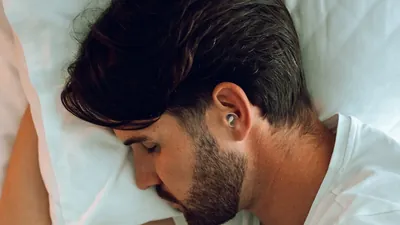
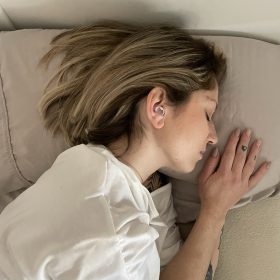
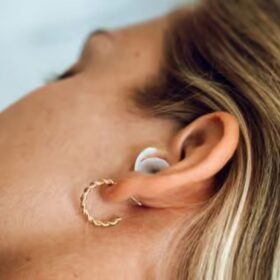
Yes. With the strap above your ears, the mask doesn’t press on earplugs, and our Life+ earplugs sit flush in the ear, so you can wear both on your side. The Deep Sleep Duo pairs our mulberry silk mask with Life+ if you want darkness and quiet in one set.
What if your sleep mask still won’t stay put?
Most slipping masks settle once the strap moves above the ears and the tension is set. If yours still rides up, the mask itself may be the issue, often a stretched elastic band or a shape that doesn’t suit your face.
Our guide on how to choose a sleep mask compares straps, materials and shape, which should help you find one that stays on and keeps the light out. Get the fit right once, and the mask becomes the easy part of going to bed.