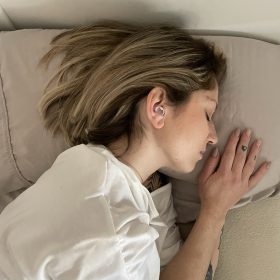
 Sleeping
 Concerts
 Motorcycle
 Swimming
 Work
 Kids
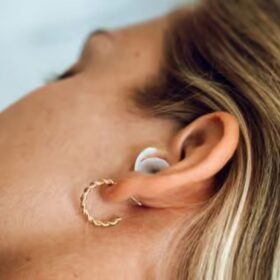

 On stage
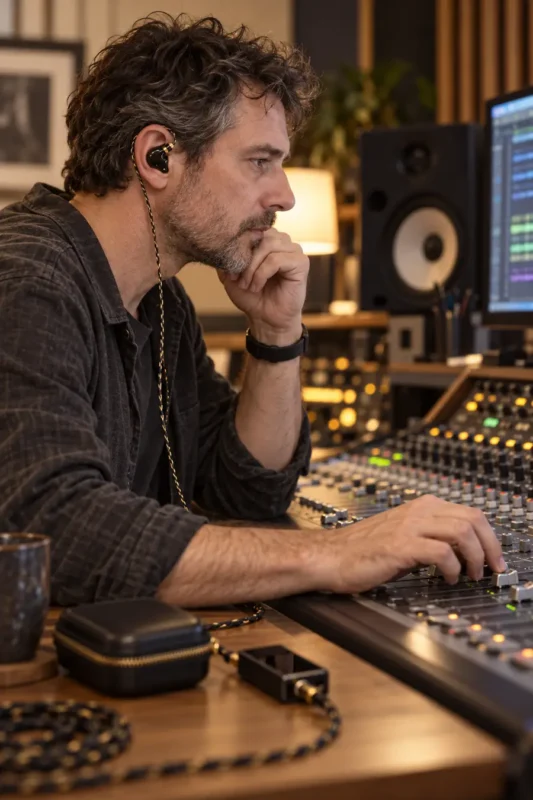 In the studio
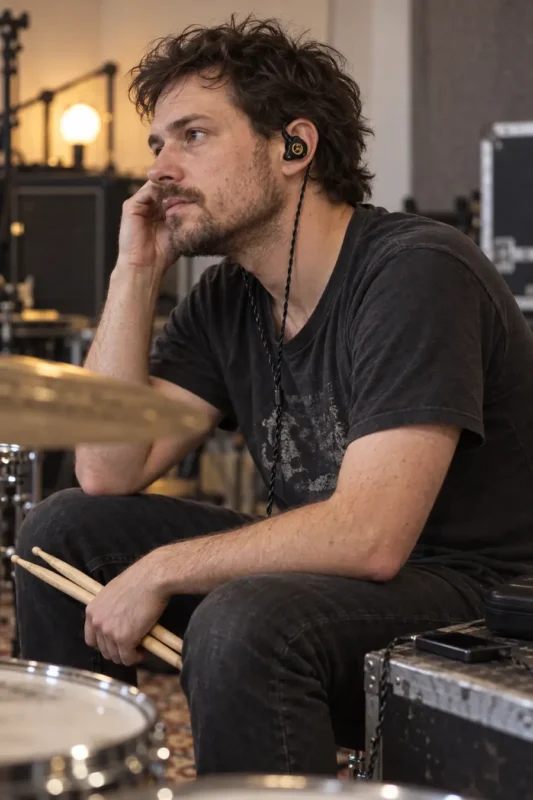 Rehearsals
 Writing music
 Mixing at home
 Daily commute
 Long journeys
 Listening at home
⏱️ Estimated reading time: 12 min
On this page: Overview
Key Takeaways
They help when light is the thing waking you. A mask creates darkness at the eyes, which suits a bright bedroom, early sunrise or daytime sleep. Studies of masks and earplugs worn together found better self-rated sleep, but a home study of masks alone found no change in sleep macrostructure.
A mask does not add melatonin. Darkness supports the body’s natural melatonin release, and light at night slows or halts it, so a mask helps by creating that darkness. In the studies cited here, higher night-time melatonin was measured when masks and earplugs were worn together in a simulated intensive care setting.
For most adults a well-fitting mask is a simple, low-risk way to make the eyes’ surroundings darker, and the NHS lists an eye mask among its suggestions for a dark bedroom. If a mask leaves your eyes sore or feeling pressed, stop wearing it and ask an optometrist.
People woken by light: a street lamp through thin curtains, a partner reading late, summer dawn before five, shift workers sleeping through the day and travellers in bright cabins or hotel rooms. If your bedroom is already completely dark, a mask has very little left to do.
Do sleep masks work? Ask online and you get two camps. Light sleepers call a good mask the best few pounds they ever spent, while others shrug that it did nothing because “the room’s already pitch black”. Both are describing the same thing from different bedrooms.
A sleep mask does one job: it creates darkness at the eyes. Whether that changes your nights depends on how much light reaches you now, and the research is more specific, and more modest, than most “benefits” lists suggest. Several studies everyone quotes were run in intensive care units, with masks and earplugs worn together.
At Bollsen, we are a family-owned hearing protection company trusted by 1,000,000+ people, and we also make the Deep Sleep Mask, a silk mask for the light half of a quiet night. So we have a stake in masks, which is exactly why we would rather tell you what the studies tested and what they did not.
What does a sleep mask actually do?
A sleep mask blocks light from reaching your eyes, creating darkness wherever you sleep, and because darkness is the signal that supports the body’s natural melatonin release at night, a mask is most useful for people whose room lets in light they cannot otherwise control.
That’s the whole mechanism. A mask adds nothing to your body and does not change how sleep is built. It removes one disturbance, light, the way an earplug lowers another.
So the fair question is not “do masks work” in general. It is whether light is part of what keeps you awake or wakes you early.
 Music SoundPRO★ 4.8 · 514 reviews
 Watersafe+★ 4.8 · 684 reviews
 Life+★ 4.7 · 3,700 reviewsLife+★ 4.7 · 3,700 reviewsMusic SoundPRO★ 4.8 · 514 reviewsWatersafe+★ 4.8 · 684 reviewsLife+★ 4.7 · 3,700 reviews
How does light at night affect melatonin?
The pineal gland starts producing melatonin in response to darkness, and light in the evening or at night slows or halts that production, which is why a dark room supports the body’s natural melatonin release in darkness and a bright one can push the body clock later, according to the Sleep Foundation.
Closing your eyes is not the same as darkness. The Sleep Foundation notes that eyelids cannot block enough light on their own, and that low indoor light can still affect the body clock while the eyes are shut. A mask covers that gap: the eyelids are closed and the light still cannot get in.
Light is only half of the bedroom picture, and the timing of light matters as much as its brightness. We go into street lamps, screens and dawn in our guide on how light affects sleep, and the sound side of the same body clock story is covered in our article on noise and your circadian rhythm, which explains how night-time noise and the internal clock interact.
What does the research on masks and earplugs show?
The strongest positive findings come from studies of eye masks and earplugs worn together, mostly in intensive care, where noise and light run all night, so they show what the pair can do in a very loud, bright room rather than what a mask achieves alone.
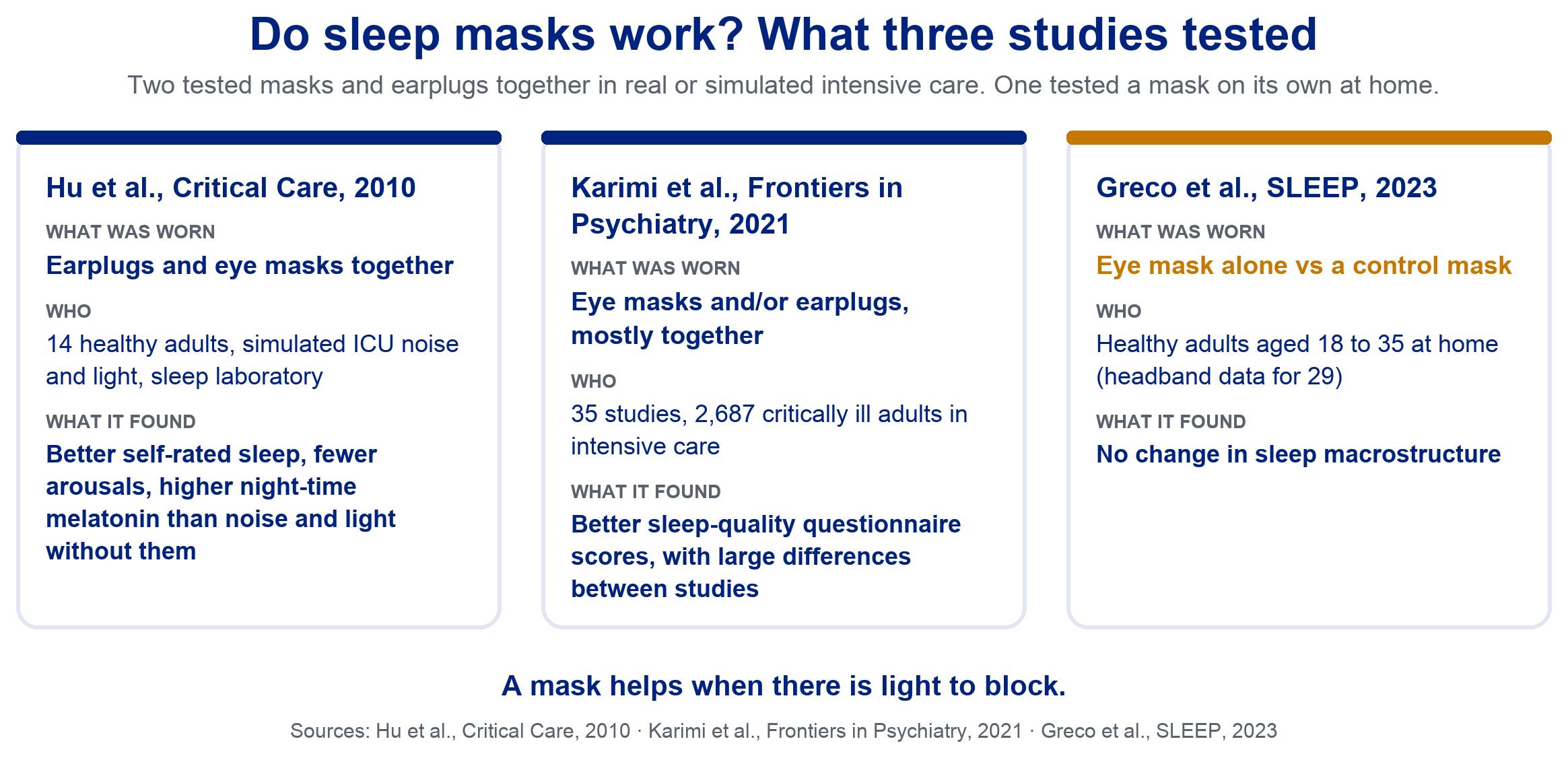
In a simulated intensive care study by Hu and colleagues (Critical Care, 2010), 14 healthy adults slept over four nights in a sleep laboratory exposed to recorded ICU noise of around 66 dB(A) and ICU-style lighting. On the night they wore earplugs and eye masks together, they rated their sleep better, had fewer arousals and showed higher night-time melatonin than on the noise-and-light night without them.
A later meta-analysis by Karimi and colleagues (Frontiers in Psychiatry, 2021) reviewed 35 studies of eye masks and earplugs in 2,687 critically ill adults and pooled 21 of them. Masks and earplugs, mostly used together, were linked with better scores on sleep-quality questionnaires, though the results varied a great deal from one study to the next.
Neither paper separates the mask from the earplugs, and neither tested a quiet bedroom at home. If both noise and light bother you, the practical side of using a sleep mask and earplugs together is covered in its own guide, and our pillar page on earplugs for sleeping explains how to pick and fit the sound half.
What happened when people wore a mask on its own?
In the home study of masks alone, healthy adults aged 18 to 35 sleeping at home wore either a light-blocking eye mask or a control mask, and wearing the eye mask did not change sleep macrostructure, meaning the overall pattern of sleep stages and their timing through the night.
The work, by Greco and colleagues, SLEEP, 2023, used a wearable headband to record sleep and had usable sleep data for 29 participants. These were young, healthy sleepers in their own bedrooms, not people with a light problem they were trying to solve.
We think this result deserves to be stated plainly. It does not show that masks are useless. It shows that for healthy young adults at home, a mask did not reshape how their sleep was put together. Anyone who asks “is it just placebo?” should know that this is the honest state of the evidence.
How do the three main studies compare?
Side by side, the three studies answer three different questions, and only one of them tested a mask on its own in an ordinary bedroom.
| Study | Who | What was worn | What it found |
|---|---|---|---|
| Hu et al., Critical Care, 2010 | 14 healthy adults, simulated ICU noise and light, sleep laboratory | Earplugs and eye masks together | Better self-rated sleep, fewer arousals, higher night-time melatonin than noise and light without them |
| Karimi et al., Frontiers in Psychiatry, 2021 | 35 studies, 2,687 critically ill adults in intensive care | Eye masks and/or earplugs, mostly together | Better sleep-quality questionnaire scores, with large differences between studies |
| Greco et al., SLEEP, 2023 | Healthy adults aged 18 to 35 at home (headband data for 29) | Eye mask alone vs a control mask | No change in sleep macrostructure |
Put together, they point back to the mechanism. A mask helps when there is light to block. In a bright, noisy ward, darkness plus quiet made a measurable difference to how people rated their nights. In a dark, healthy bedroom, a mask on its own had little to change.
Who is most likely to notice a difference?
The people most likely to notice a difference from a sleep mask are those whose nights are interrupted by light they cannot switch off: light sleepers under a street lamp, partners of late readers, anyone woken by summer dawn before five, shift workers sleeping in daylight, and travellers in cabins or hotel rooms.
In UK summers the sky brightens well before most alarms, and thin curtains let that light straight onto the pillow. Daytime sleep after a night shift is the same problem for longer. In both cases the light is real, and a mask removes it without rehanging every curtain in the house.
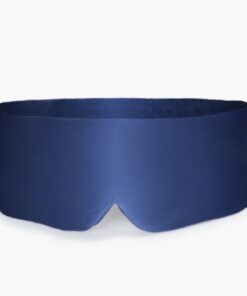
If you want a mask for those nights, our Deep Sleep Mask is made entirely from natural mulberry silk, with no cotton, and is designed for total darkness. It fastens with an adjustable Velcro strap that won’t degrade or pull hair, washes at 30 °C, folds for travel, comes in one size and three colours, and costs £39.95.
If noise wakes you as much as light, the Deep Sleep Duo pairs that mask with our Life+ earplugs, which are made from hypoallergenic silicone and rated at an SNR of 24 dB.
What can’t a sleep mask do?
A sleep mask cannot change anything that is not caused by light, so it will not settle a racing mind, a noisy street, a warm room or long-running sleep problems, and the studies above give no reason to expect it to change how your sleep is structured.
The NHS puts a mask in its proper place, as one item in a dark, quiet bedroom: “use curtains, blinds, an eye mask or ear plugs if needed”. If poor sleep carries on for weeks despite a dark, quiet room, or starts to affect your days, the NHS advice on sleep problems is to see a GP.
Comfort matters too. If a mask leaves your eyes sore, itchy or feeling pressed, take it off and talk to an optometrist before trying again. Hygiene and pressure on the eyes get their own guide, which answers the question many owners ask first: is it safe to wear a sleep mask every night?
How do you choose a mask that works?
A mask works only if it fits, stays on and keeps light out at the edges, so judge any sleep mask first on how well it seals around the bridge of the nose and the cheeks, then on a strap that holds its tension, and then on whether you can wash it easily.
Fit is the commonest reason people decide masks “don’t work”. In owner reviews the complaint is rarely the idea and nearly always the hardware: “it invariably came off during the night”, or it slid to one side on the pillow. An adjustable strap lets you set the tension once and leave it.
Give a new mask about a week. Many owners say it took a few nights to stop noticing it on their face, so judge it after that rather than on night one. Shapes, materials and straps are compared in our guide on how to choose a sleep mask, which walks through every option.
Is a sleep mask worth trying?
If light reaches your eyes at night or in the early morning, yes. The mechanism is sound, darkness supports the body’s natural melatonin release, and the evidence for masks with earplugs in bright, loud places is encouraging. What the research does not show is that a mask on its own changes how a healthy sleeper’s night is built.
So think of it as a practical tool for a practical problem. Check how much light your room lets in at five on a June morning, and if the answer is “plenty”, a well-fitting mask is a simple test. Our Deep Sleep Mask comes with a 40-day money-back guarantee, which gives you enough nights to see for yourself.