
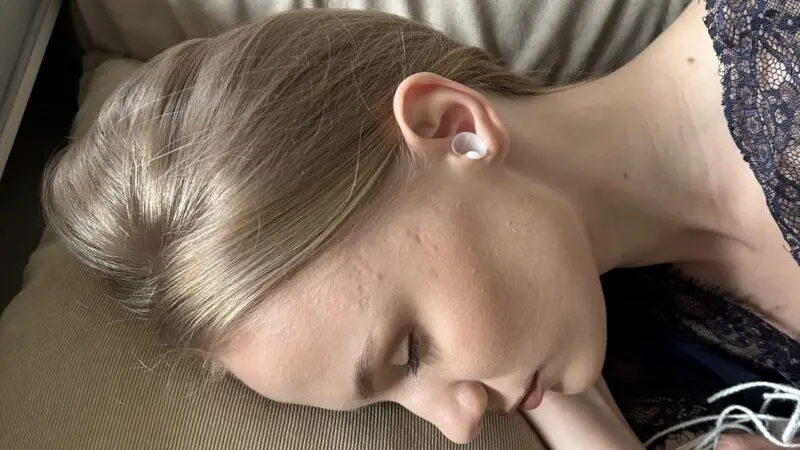
 Sleeping
 Concerts
 Motorcycle
 Swimming
 Work
Work Kids
Kids

⏱️ Estimated reading time: 9 min
Key Takeaways
The NHS describes tinnitus as hearing noises that do not come from an outside source, such as ringing, buzzing or hissing, in one or both ears. DJs spend years in loud rooms, so noise exposure is one of the main risk factors they can actually control.
Temporary ringing after a loud night is common, but it is a warning sign, not a normal side effect of the job. It tells you your ears were exposed to more sound than they liked. If the ringing lasts or keeps coming back, speak to your GP or an audiologist.
Wear hearing protection at every gig, keep monitor levels no higher than you need, take quiet breaks during long sets and give your ears recovery time afterwards. These habits reduce noise exposure, which is a main avoidable risk factor.
No earplug can promise that. Tinnitus has several possible causes. What earplugs such as Music SoundPRO do is lower the volume reaching your ears, so you still hear the music, just quieter, and cut a main avoidable risk factor.
See a GP if ringing lasts more than a few days, is in one ear only, keeps returning, or comes with a change in your hearing. The NHS advises going to A&E or calling 999 for tinnitus with sudden hearing loss.
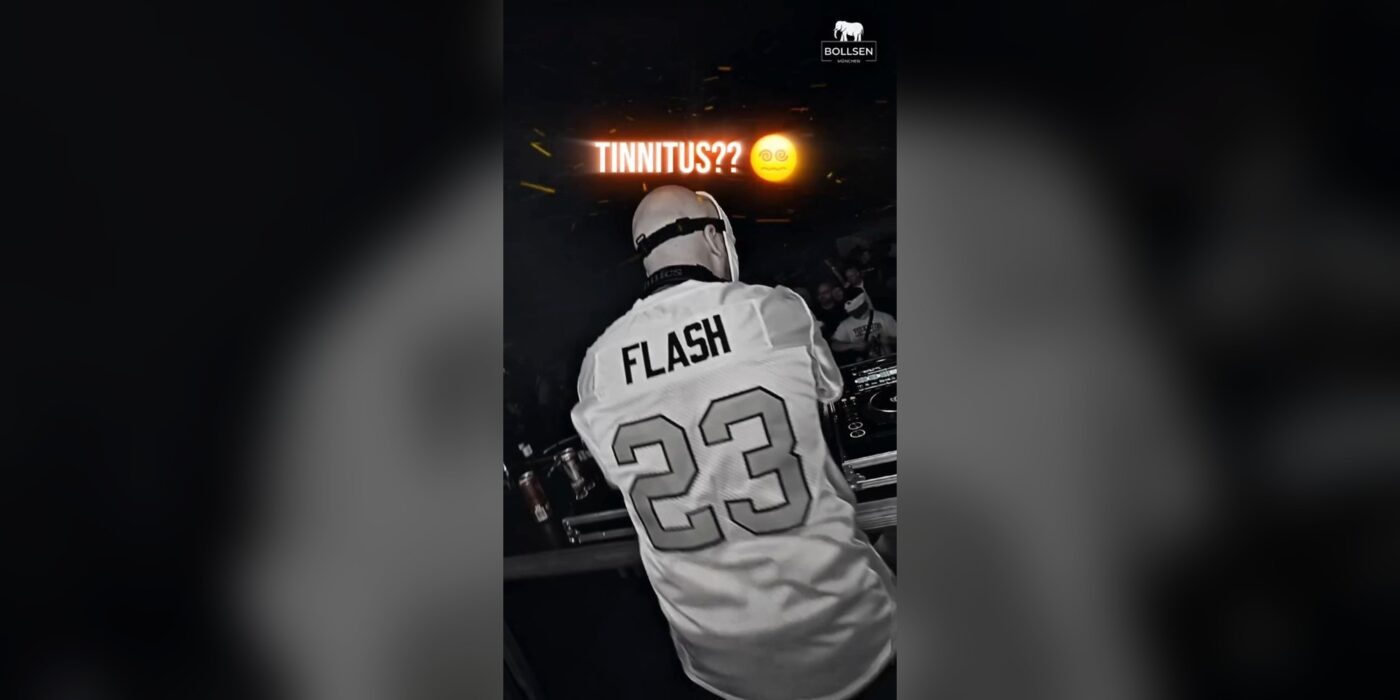
DJs rarely think about tinnitus until it happens. BOLLSEN works with Flash Forward, a techno DJ duo (Instagram: @flashforward_tekno), as a partner; their Instagram post is a paid partnership. They put it like this (translated from German): “Tinnitus is something you never think about as a DJ, until you suddenly have it.”
This guide looks at tinnitus and DJs from a prevention angle: what tinnitus is, why club work raises the risk, what temporary ringing after a gig is telling you, and which habits lower your exposure.
What is tinnitus?
The NHS defines tinnitus as hearing noises that do not come from an outside source. It can sound like ringing, buzzing, whooshing, humming or hissing, in one or both ears or in your head, and it may come and go or be constant. The NHS notes it is often linked to some form of hearing loss, among other causes, and that it is not usually a sign of anything serious and may get better by itself.
That is worth keeping in proportion. Not every DJ will develop tinnitus, and loud noise is not the only cause. But exposure is the factor you can do something about, which is why it deserves attention before anything goes wrong.
Why DJs are exposed
A DJ spends hours close to loud sound, often several nights a week. The World Health Organization estimates that over one billion young people globally are at risk of hearing loss due to sound exposure in recreational settings, and has published a global standard for safe listening venues and events because of it. DJs work inside that environment rather than visiting it once in a while.
Several things stack up in the booth:
- Long sets. Exposure builds with time as well as volume, and a headline slot or a back-to-back session can run for hours.
- Monitor levels. Booth monitors sit close to your head. It is easy to keep nudging them up to hear the mix over the room, which raises the level at your ears.
- Repetition. Gig after gig, with little time for your ears to recover in between.
- Headphones. Cueing at high volume on top of a loud room adds to the total dose.
Our guides on how loud concerts really are and whether concerts can cause tinnitus go deeper on the levels involved, and our DJ ear plugs guide covers choosing protection for the booth.
Ringing after a gig is a warning sign
If your ears ring or feel muffled after a night in a loud room, treat it as a signal. It means your ears have had more sound than they handled comfortably. Many people shrug it off because it usually fades, but a pattern of repeated ringing is exactly what you want to avoid.
Do not wait for it to become permanent before changing anything. Reducing exposure early is far easier than dealing with the consequences later.
Habits that lower your exposure
None of these are complicated, and you can start with all of them at the next gig:
- Wear earplugs at every gig. Flash Forward say in their post (translated from German): “That’s why we wear BOLLSEN earplugs at every gig.” Consistency matters more than occasional use.
- Check monitor level. Set it as low as you can work with, and turn it down rather than up when the room gets louder.
- Build in breaks. Step out of the loudest area between sets when you can.
- Give your ears quiet time. Allow a quiet period after a gig before the next loud session, and avoid following a loud night with loud headphones.
- Pay attention to changes. Note any ringing or muffled hearing and how long it lasts.
The NHS also advises wearing ear protection when exposed to loud noises. Earplugs do not make tinnitus impossible, and we would not claim they do. They lower the volume reaching your ears, which reduces noise exposure, a main avoidable risk factor.
Where Music SoundPRO fits
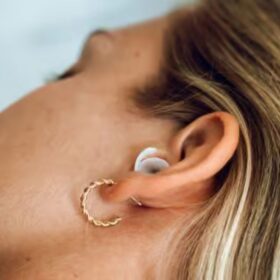
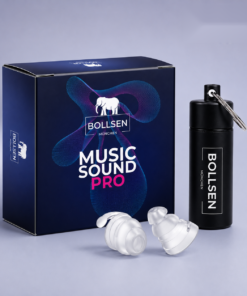
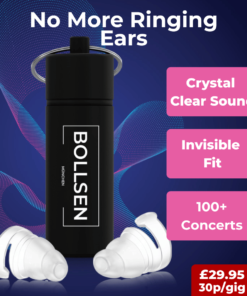
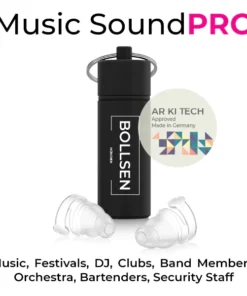
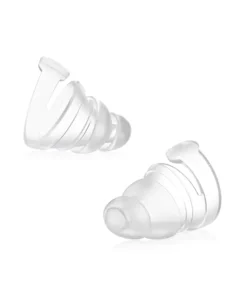
Music SoundPRO is a passive, reusable earplug made from hypoallergenic silicone, with an SNR of 24 dB (H24, M21, L19). It is not electronic and it is not noise cancelling. Attenuation rises with frequency, from roughly 22 dB in the lows to around 35 dB at 8 kHz, so you still hear the music, just quieter. It can be reused up to 100 times and comes in an aluminium case with a keyring, so it lives in your gig bag. There is also a version with AR KI TECH if you want the sizing measurement.
Wearing them is only one part of the picture. See every expert who trusts BOLLSEN for more, or browse our earplugs for music guides.
When to see a GP or audiologist
If ringing lasts or keeps coming back, speak to your GP or an audiologist. The NHS advises seeing a GP if you have tinnitus regularly or constantly, if it is getting worse, or if it is affecting your sleep or concentration. Get help sooner if:
- ringing lasts more than a few days after a gig
- it is in one ear only
- you notice a change in your hearing, such as muffled sound or difficulty following speech
- it beats in time with your pulse (the NHS says to ask for an urgent GP appointment)
- it comes with sudden hearing loss, dizziness or weakness in the face, in which case the NHS says to go to A&E or call 999
For support, Tinnitus UK has a Musicians Hub with advice and a support group for people in music.
The takeaway
Flash Forward’s own advice is short (translated from German): “Look after your ears, you only have this one pair.” Wear protection every time, keep monitors sensible, rest your ears, and get checked if something does not feel right. If you want to keep reading, our siblings in the Experts series include the DJ UMEK expert review and the Dubioza Kolektiv concert review.
Sources
- NHS: Tinnitus
- NHS: Hearing loss
- WHO: Global standard for safe listening venues and events
- Tinnitus UK: Musicians Hub